
Books · Runes
Runes: A Concise History and the Full Life of a Script
- Author
- Editorial Board, Orphic Meridian Association
- Date
- 2025-11-26
- Reading time
- 4 min
Tom Birkett's Runes: A Concise History was published online by Oxford Academic on 20 November 2025. Rather than beginning with a fixed set of divinatory meanings, it follows inscriptions and rune writers from the early Germanic script to its modern cultural afterlives.
Six chapters beyond the Viking Age
The contents move from the earliest runic writing to the Younger Futhark of the Viking Age, medieval Scandinavia, the English tradition, runes on manuscript pages, and post-medieval political and religious reception.
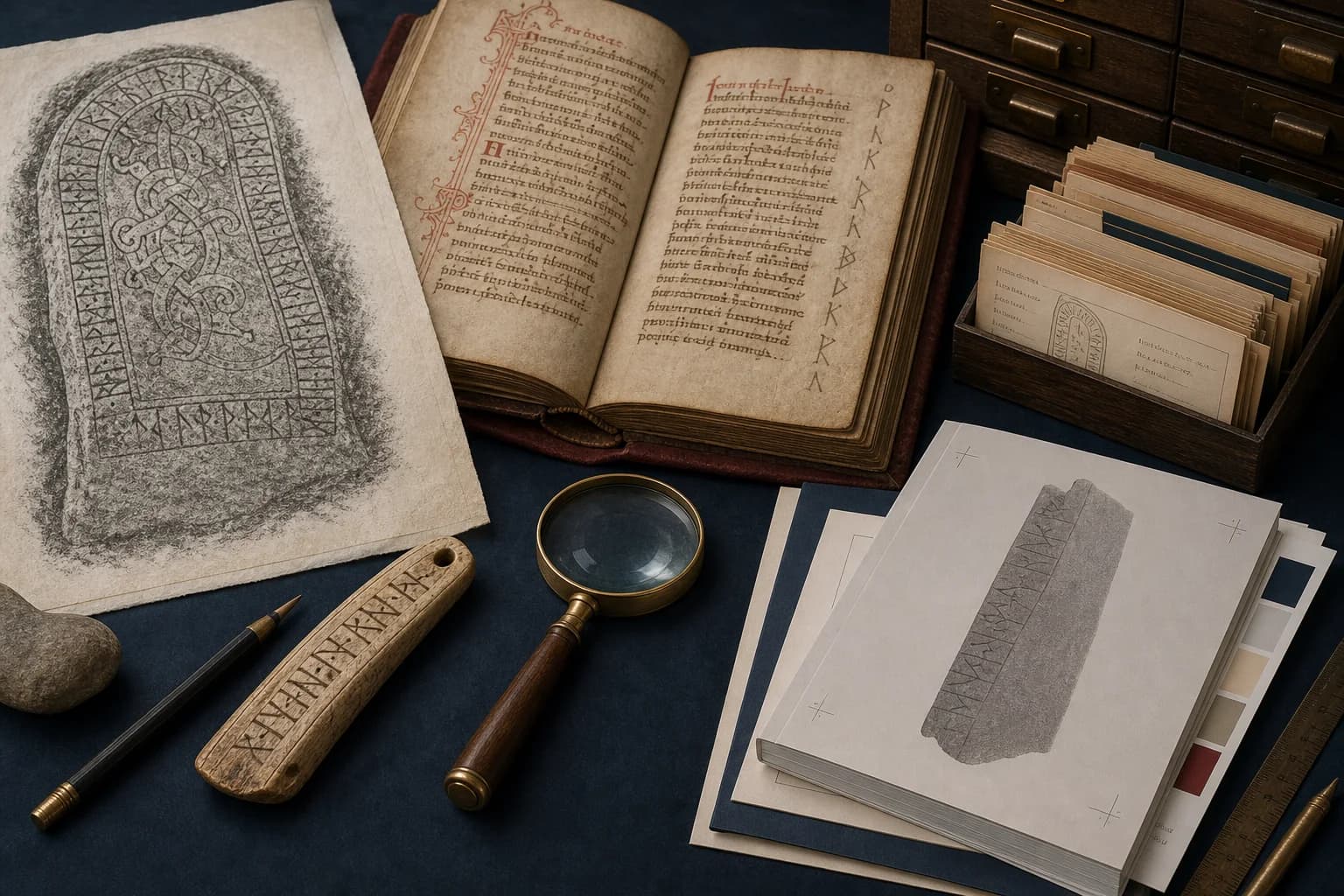
That structure corrects two familiar reductions. Runes do not belong only to the Viking Age, and they were not used only on memorial stones. Short messages on jewellery, merchants' records, graffiti, and manuscript annotations all belong to the history of the script.
How new finds change a survey
The publisher notes the inclusion of objects discovered only in recent years. A history of runes must therefore change as datable contexts, digital reconstruction, and new readings alter the evidence.
New finds also require restraint. A deliberate incision is not automatically a rune, and the recognition of one character does not establish a translation. Support, archaeological context, language, and neighbouring marks must be considered together.
Why modern reception belongs in the history
The final chapter addresses adaptations of Tolkien, video games, modern paganism, and far-right appropriation. A course that teaches only symbolic meanings can leave students unable to distinguish historical writing, popular design, and imagery carrying contemporary political associations.
For practice-led study, a survey of this kind belongs near the beginning: identify the script, date the evidence, and separate historical use from modern symbolic reconstruction before introducing divination.