
Research Notes · Icelandic Magical Staves
New Research Places Galdrastafir within European Learned Magic
- Author
- Editorial Board, Orphic Meridian Association
- Date
- 2025-12-17
- Reading time
- 4 min
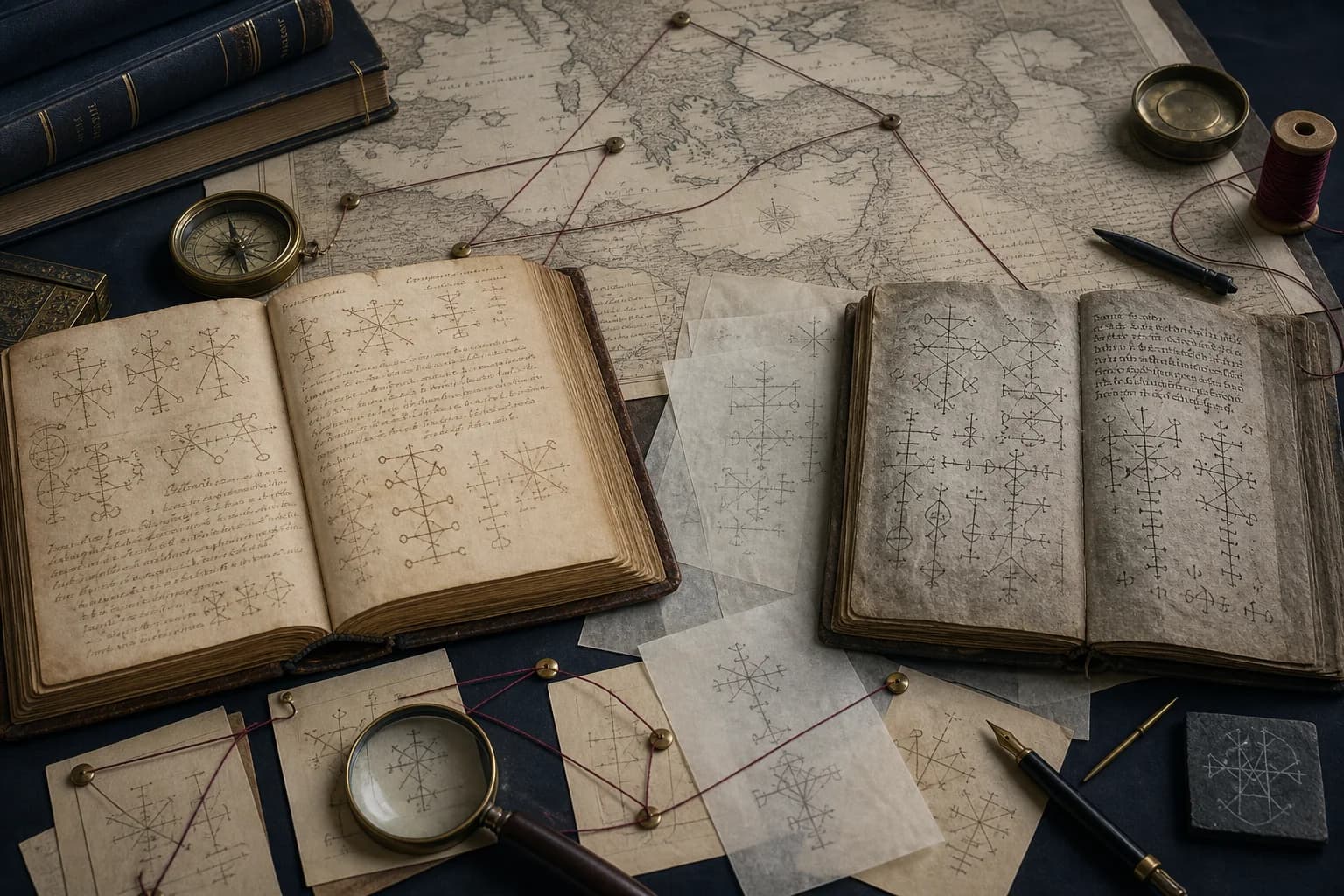
In December 2025, Roberto Luigi Pagani published an article in volume 36 of Gripla arguing that galdrastafir belong within the wider transmission of European learned magic rather than an isolated body of purely Nordic survivals.
The article's argument
“The Mediterranean Origin of the Galdrastafir: Tracing the Transmission of the Learned European Magical Tradition into Icelandic Popular Lore” appears on pages 241–269.
Pagani compares iconographic and conceptual evidence and connects the Icelandic material to medieval, Renaissance, and early modern grimoire traditions, especially material associated with Solomonic magic. In Iceland, those elements were selected and localized, while agency increasingly came to be attributed to the signs themselves.
“Mediterranean origin” is not a straight line
The title can suggest that a finished symbol was carried intact from one region to another. The process described is more complex: texts were copied, names translated, religious explanations adjusted, and diagrams assigned new purposes.
The argument does not make every Icelandic stave the product of one southern book, nor does it remove the creativity of Icelandic compilers. It examines how a learned tradition was reorganized at the edge of a European network of texts.
Why this changes a familiar story
Popular culture often places any radial or geometric Icelandic sign under “Viking magic.” The surviving manuscript record is much later. A European grimoire context helps explain the coexistence of Christian names, ritual commands, practical folk aims, and rune-like strokes.
The point is not to replace a Nordic label with a Mediterranean one. Early modern manuscript culture already crossed languages, confessions, and regions.
A better way to study a stave
For any sign, compare its earliest manuscript witness, related European diagrams, accompanying words, and alterations between copies. Comparing modern redrawings alone removes the instructions and textual details that can demonstrate transmission.
The study also cautions against merging galdrastafir, runic writing, and modern sigil magic into one system on the basis of shape. They may interact, but their documentary histories differ.