
Research Notes · Tarot and Cartomancy
What Researchers Discuss When Cartomancy Enters the Seminar Room
- Author
- Editorial Board, Orphic Meridian Association
- Date
- 2025-05-09
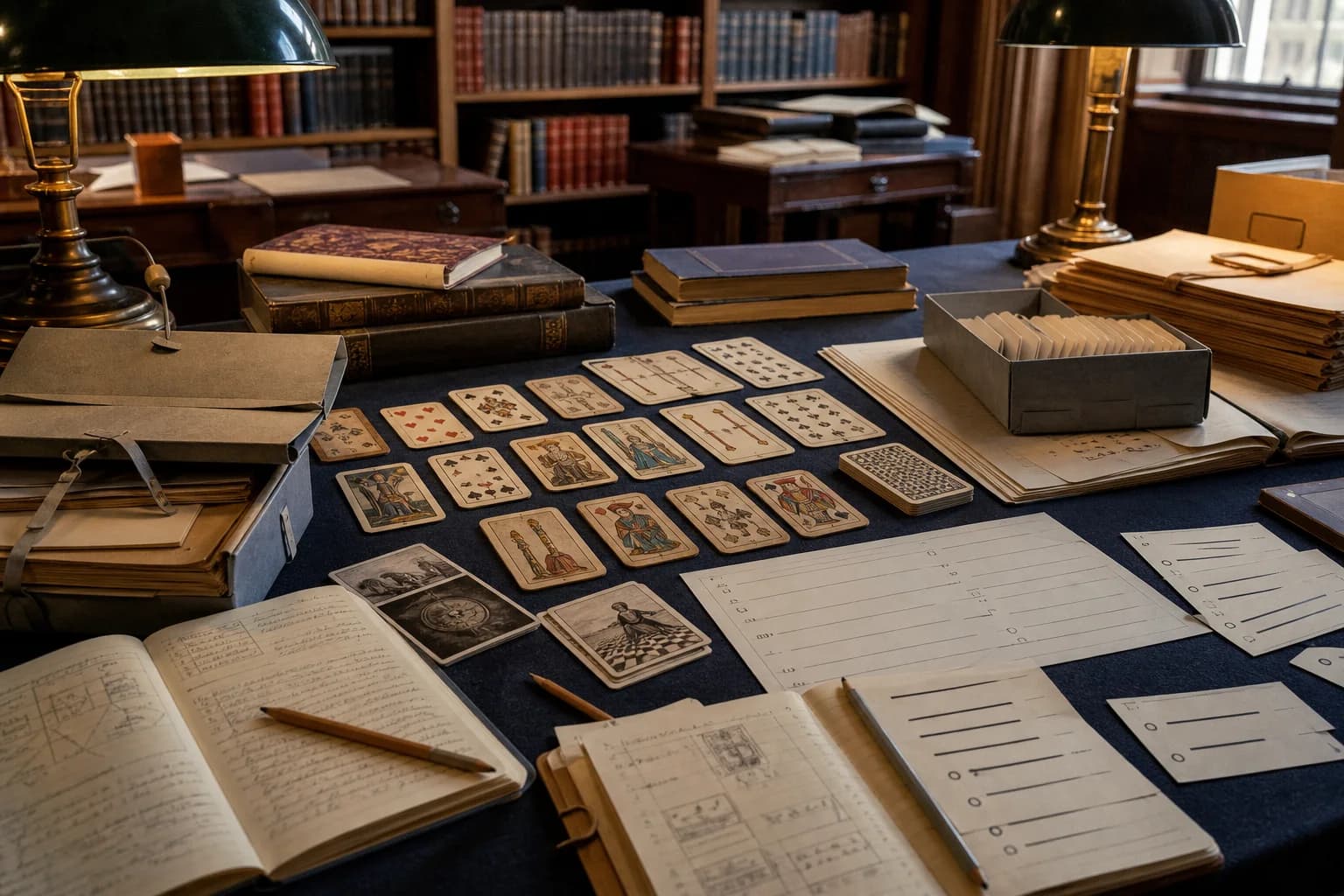
On 9 May 2025, the Divination, Oracles, and Omens Network at the Oxford Research Centre in the Humanities held a full Cartomancy Day. The programme treated card divination not as one self-contained tradition but through cultural history, archives, ethnography, and digital behaviour.
Four papers, four points of entry
Helen Farley traced tarot from a fifteenth-century Italian card game to its transformation into a divinatory practice around the French Revolution, then into art, psychology, and popular culture. Jeff Ravel approached playing cards historically. David Zeitlyn examined questions sent to the Bodleian's online cartomancer. Will Pooley compared Mlle Lenormand's publications with clients' diaries and records of her prosecution for fraud.
Together, the papers show that research need not begin by proving or disproving a reading. It can ask when an image appeared, how rules changed, what users asked, and how a famous reader's public identity was assembled by both the practitioner and later writers.
What can 3,655 questions establish?
One paper analysed 3,655 questions posed to the Bodleian's online cartomancy game from early December 2024 to mid-January 2025. The public programme does not report the full findings, so it cannot support claims about the most common topics or the people who submitted them.
The project nevertheless points to a repeatable method: anonymized analysis of question categories, timing, and language, with privacy protected. Such evidence can inform public guidance and identify questions that require firmer service boundaries.
A practical implication for readers
Practice records should contain no more personal information than their stated purpose requires. Consent to receive a reading is not consent for a question to become teaching material, publicity, or public research.
That is the immediate value of this kind of academic programme. It turns a familiar practice into questions that can be checked and requires every conclusion to stay within the limits of its evidence.